



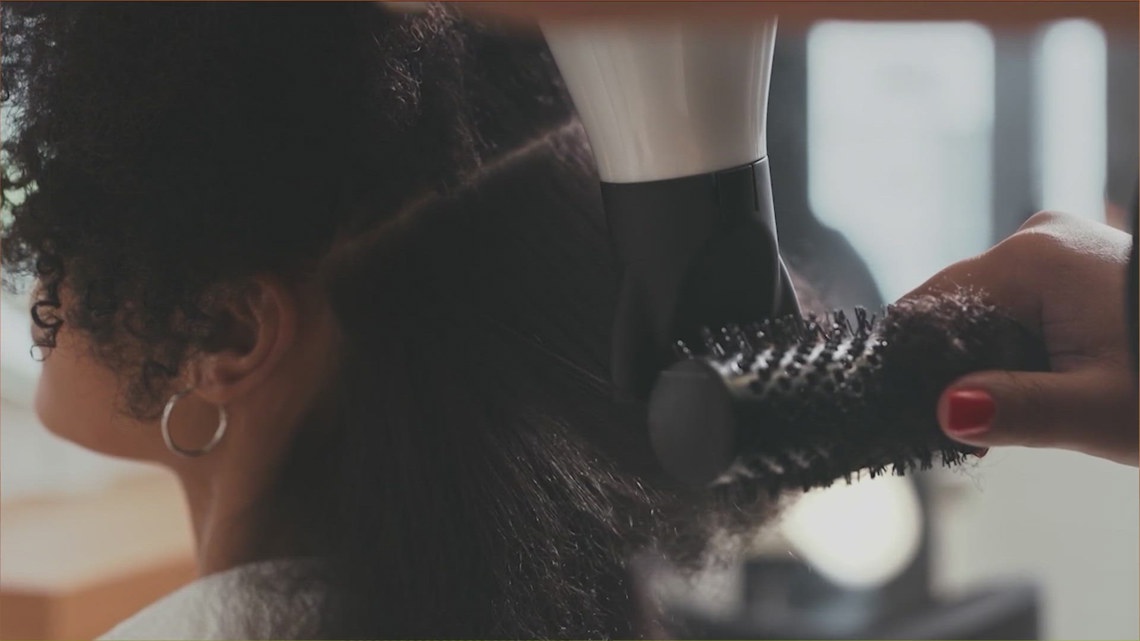
“I think it’s up to us to try to educate our clients since we know now,” salon owner Brittnay Roller said.
ST. PETERSBURG, Fla. — Hairstyles rooted in culture, pride and identity are now causing health risks due to the extensions used to create them. For Black women especially, the beauty of braids, sew-ins and relaxers comes with an often overlooked cost.
10 Tampa Bay, along with sister stations across the TEGNA network, launched a collaborative series called “Damage Control” to dig into growing concerns that some hair products, especially chemical relaxers and synthetic extensions, may pose serious health risks, including cancer.
Now, stylists are taking a look at what they’re using in the salon and offering advice to their clients and others about what to look for when you’re considering your next style.
For braiding specialist Jerlyn Jolly, hair has always been more than just a style. It’s a ritual passed down through generations, but she learned early that beauty was pain.
“Yeah, my scalp might be burnt off, but my hair will be straight and it’ll be two inches longer,” said Jolly, reflecting on early experiences with hair relaxers. She’s not alone.
Salon owner Brittnay Roller of The Laboratory in St. Petersburg said many of her clients share similar stories.
“They grew up and thought it was normal. Oh, it burns? Leave it on for five more minutes. It’s working,” Roller said.
But now, thousands of women are suing companies that make and market chemical relaxers, alleging links to cancer. On top of that, a new Consumer Reports study revealed several brands of synthetic hair extensions may contain cancer-causing chemicals and lead.
At The Laboratory, Roller and her stylists are making it their mission to keep their clients informed.
“I think it’s up to us to try to educate our clients since we know now,” she said.
Licensed cosmetologist Destiny Roberts shared that her clients are now asking questions and pushing for answers.
“One of my clients let me know that they are looking into it and wanted me to look further into it,” she said.
But not every client is ready to make a change, even when presented with the facts.
“It’s almost like cigarettes,” Jolly said. “It’s on the box that it can cause cancer, but they still smoke cigarettes.”
Roller believes the responsibility doesn’t just lie with stylists, it should also fall on the brands behind the products.
“The companies need to ethically produce their products,” Roller said. “I’m sure there are safer chemicals that can be used to get the same end result and I’m sure half of those chemicals aren’t even necessary.”
Until that change happens, stylists at The Laboratory will continue fighting for the health of the women who trust them, one conversation and appointment at a time.
This post was originally published on this site be sure to check out more of their content.