

“We have to fight harder to be seen.” “As a woman you have to work much harder.” “Men can be mediocre and still thrive. Women have to be extra good, extra different, extra interesting.” These are the sentiments of three successful British rappers: Cristale, Ms Banks and Enny.
It’s no surprise — just look at the nominations for the major music awards in the UK. In the four years since the hip-hop/grime/rap category was introduced at the Brits, only one woman has been nominated: Little Simz (in 2022, 2024 and this year). She is also the only woman to have won the award for best hip-hop act at the Mobos in the past ten years, a prize she took home in 2023 and 2024. No British female rapper made it on to the Top 40 albums or singles chart in 2024.
This gender disparity is all the more striking because in the US it’s the opposite story. Doechii, a ferociously talented 26-year-old from Florida, won the Grammy for best rap album in February. More and more female rappers are making the Top Ten there — from Nicki Minaj and Cardi B to Megan Thee Stallion, Ice Spice and Doja Cat — to the extent that in 2023 the New York Times announced: “The future of rap is female.” That said, Doechii was still the only woman on the list of nominees for that Grammy category this year and she, Cardi B and Lauryn Hill are the only women to have won it.
• Brits predictions: who will win — and who should win?
“There’s a very masculine energy within rap. Sometimes women are made to feel like it’s not their place,” says Ms Banks, a 30-year-old rapper from London with 500,000 monthly Spotify listeners. She and Cristale both talk about receiving comments on social media telling them to “get back to the kitchen” and that women shouldn’t rap.
The history of the genre bears this out. “In the Nineties and 2000s, there was a one in, one out mentality. They could only ever support one woman at a time,” explains Arusa Qureshi, the Scottish-based author of Flip the Script: How Women Came to Rule Hip Hop. “In the UK we still haven’t got past that.”
In David Kane’s book on UK rap, What Do You Call It?, he interviews the British rapper Shystie, who tells him that in the early 2000s the radio wouldn’t play both her and Estelle, another female rapper, so they went for Estelle. “That kind of deterred me from making more music,” she recalls.
Despite the hurdles, British women have been making their mark on rap since it came over from the US, starting with Cookie Crew, the duo who formed in south London in 1983. “I remember seeing Ms Dynamite on the Mobos on TV and being obsessed with her,” says Tiffany Calver, 30, a BBC 1Xtra host whose show spotlights emerging hip-hop artists. She points to Estelle, Lisa Maffia, Lioness, Lady Leshurr and Shystie as other favourites from her childhood. “But the fact of the matter is I can list you all of these names quite quickly, whereas if you were to ask me about the male counterparts I’ve grown up listening to we’d be here for hours.”
In 2022 Little Simz burst into the mainstream consciousness with four Brit nominations, a win for best new artist, four Mobo nominations and a best album win for Sometimes I Might Be Introvert, as well as taking home the Mercury prize and an Ivor Novello for her song I Love You, I Hate You. “We were so happy because it was a ‘finally’ moment, screaming from the rooftops: finally she’s being seen,” Calver says. But, she adds, it was interesting to see her win best new artist. “I’d known Little Simz as an artist since ten years before that — it definitely was not an overnight thing.” In fact she released her first mixtape, Stratosphere, in 2010, aged 16.
Her independence and refusal to compromise have inspired other artists, such as Enny, 30, from London, who has two million monthly Spotify listeners. Marketing and image is a big part of that. “Women are starting to expand outside of the stereotypical idea of what a female rapper should be,” Enny says. For her this stereotype is “oversexualised — I’m not going to beat around the bush”. Ms Banks releases her music independently and promotes it herself.
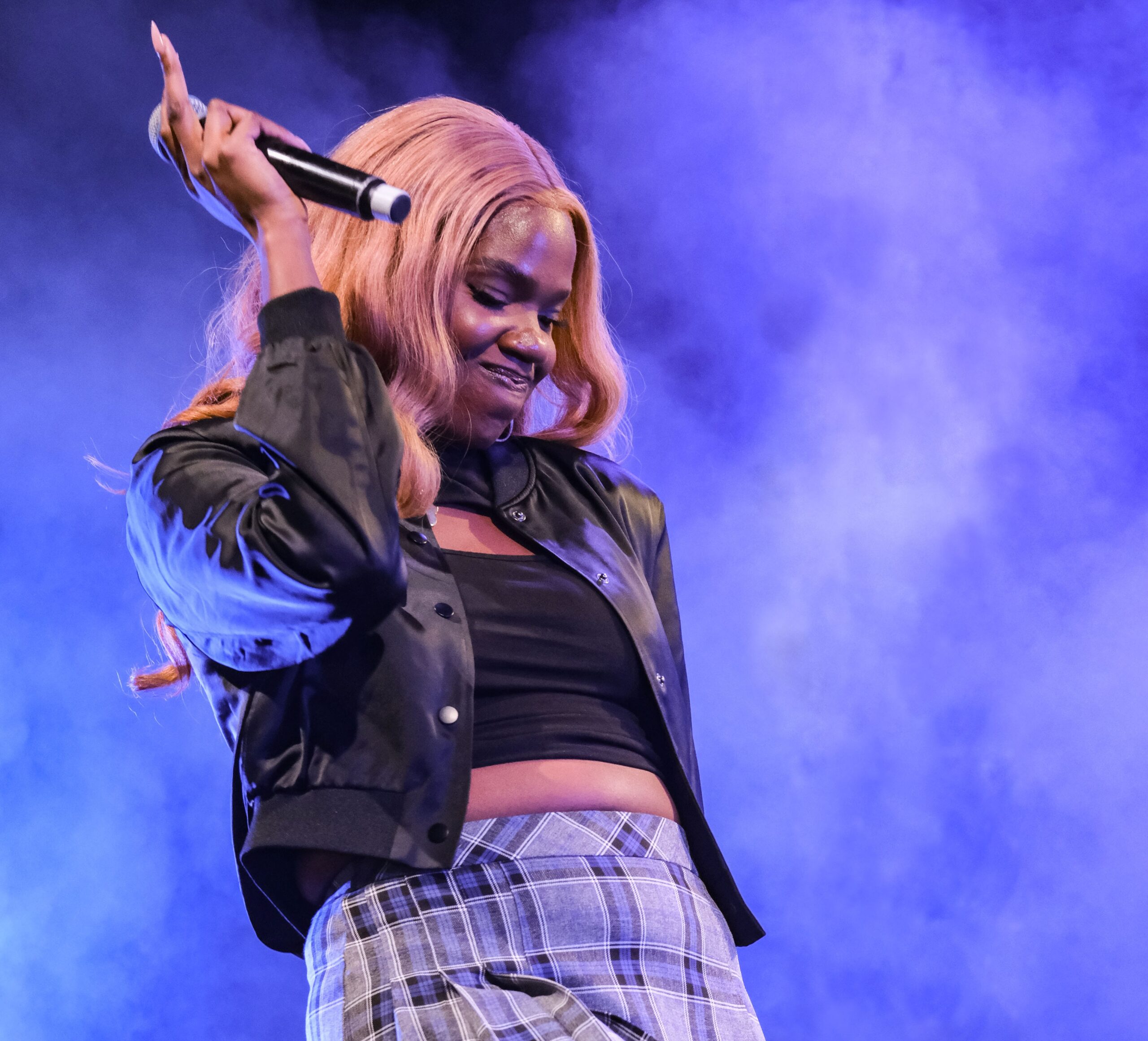
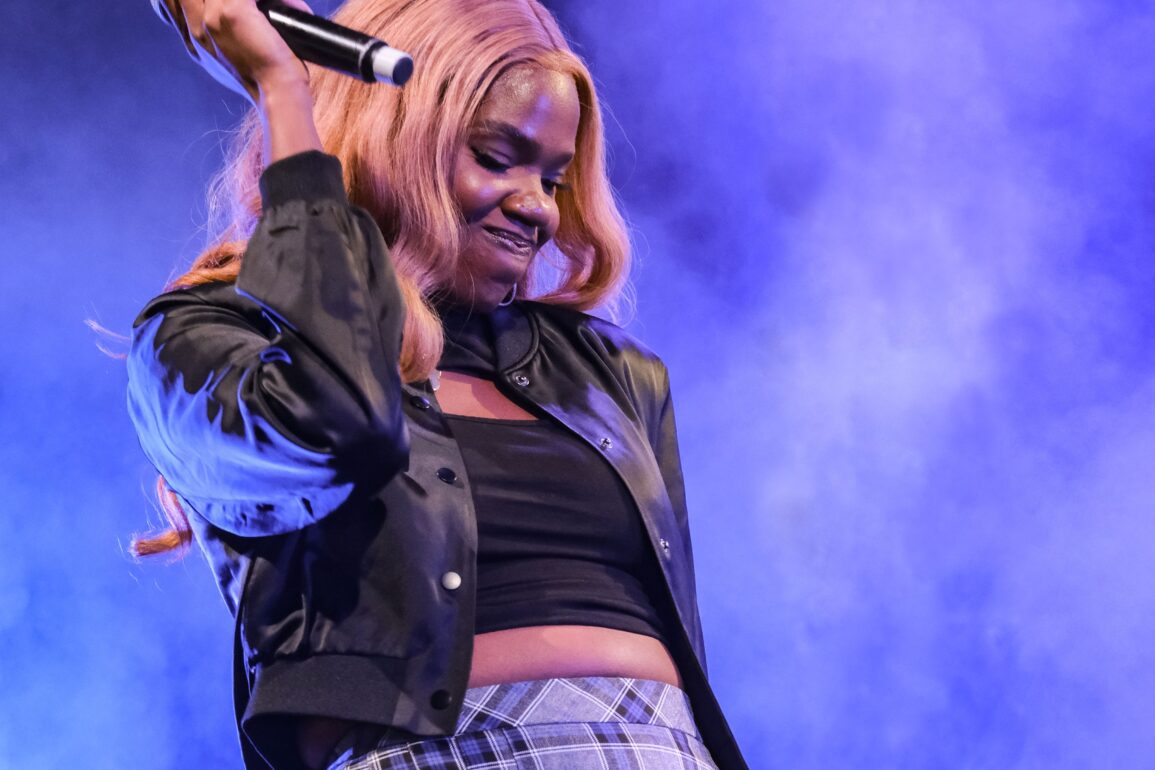
Enny: “The guys get to have a lot of fun”
REDFERNS
Little Simz also became known to the wider public through her acting work, most prominently playing Shelley in Top Boy and herself in the Spider-Man film Venom: Let There Be Carnage. Cristale, 23, the only woman nominated in the hip-hop category at this year’s Mobos, also appeared in Top Boy as well as Channel 4’s Queenie, expanding her audience. “I definitely think acting has had a massive part to play in my development because it showed people that I’m a multi-genre artist.” She has more than a million followers on TikTok, not just thanks to her music but also her entertaining “get ready with me videos”.
Women still need more exposure. “The guys get to have a lot of fun,” Enny says. “They get to do football stuff and all these charity things. I don’t think there’s a space that pushes that same energy for women.” They also, crucially, are under-represented on the live scene, an issue that’s compounded by the closure of many grassroots music venues: 125 in 2023 and two still closing every month.
In 2021 researchers from Utrecht University and Universitat Pompeu found that streaming services were more likely to suggest male artists. Festivals are still male-dominated: 63 per cent of the acts in UK line-ups last year were either all-male or male-led. This month Wireless, a rap and hip-hop festival in London, announced that the Canadian rapper Drake would headline all three days. The top five most popular songs on UK radio last year were by men; female artists made up just 26.8 per cent of plays.
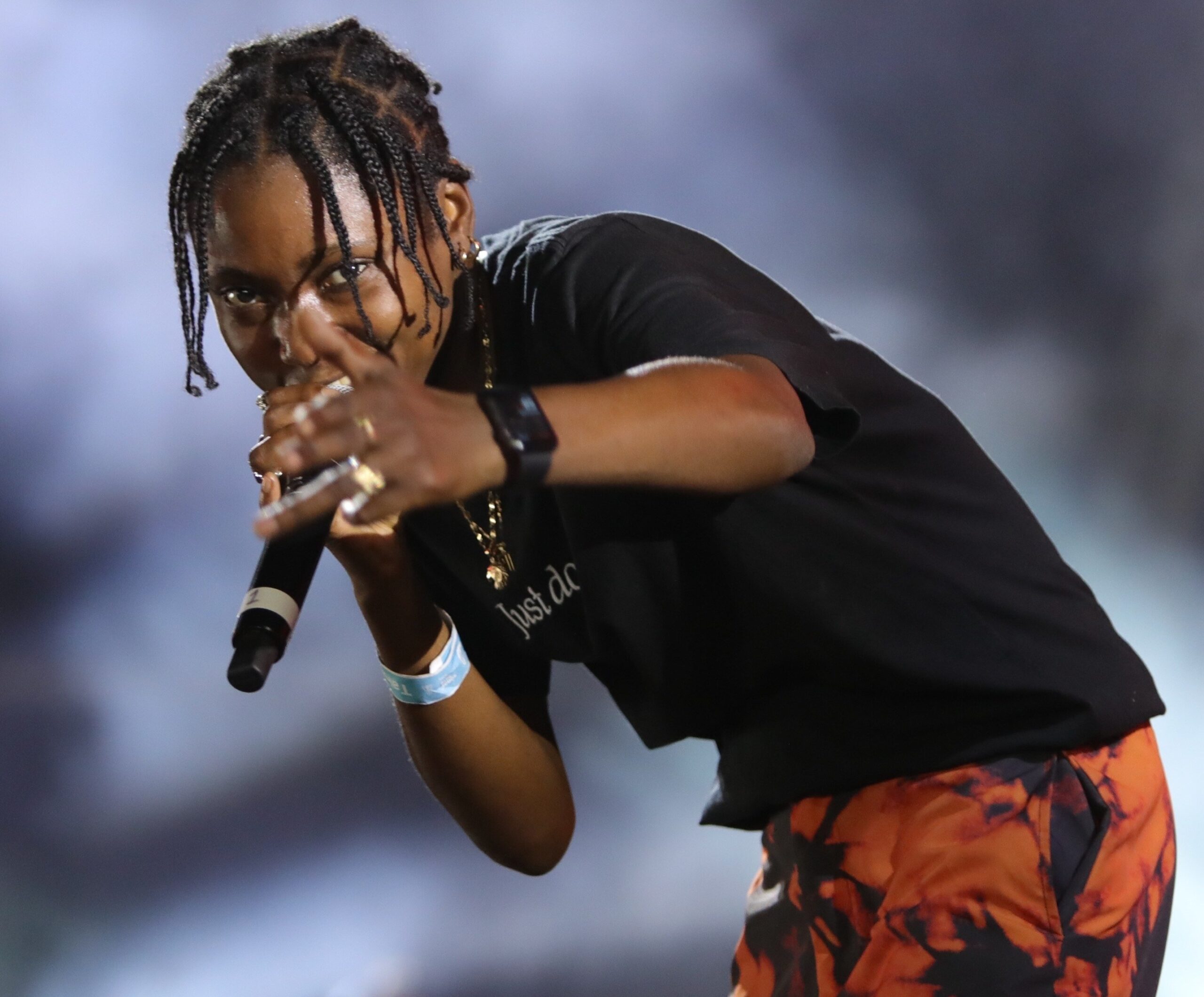
The London-based rapper Flohio, 31: “Change only happens when you give somebody a chance”
SASHENKA GUTIERREZ/EPA-EFE/SHUTTERSTOCK/REX
A report from the women and equalities committee last year also found that women were under-represented in positions of authority in the music industry. Ms Banks recalls moments where “you’re not really always looked at as a colleague or someone that you can just collaborate and work with. It’s more what they can gain from you … sexual advances and stuff.”
• ‘It’s a power shift’: how women took over the pop world
There is an overriding feeling of optimism, however, in all my conversations with rappers, writers and tastemakers. Calver points to the proliferation of women hosting rap, grime and drill shows, such as Ellie Prohan on Kiss and Sian Anderson, a fellow 1Xtra presenter.
Another major influence is “cosigns” — when big stars share your work or speak positively about it. Kendrick Lamar showed early support for Little Simz in 2015 and Minaj tweeted about Ms Banks back in 2017. “That really catapulted me into fame,” she says. She then went on to tour with Minaj.
Guest slots are also crucial. Famously, Minaj exploded in popularity after she outshone Kanye West, Jay Z and Rick Ross on the song Monster in 2010. “There needs to be more cross-pollination between the genders,” Calver says. “Women don’t just have to work with women.” She gives AJ Tracey’s recent viral track Crush, which features Jorja Smith, as an example. When men on her show compliment female rappers, she asks them “where’s the feature?” — in other words, why have they not collaborated with that woman? Ultimately, as the 31-year-old London-based rapper Flohio says, “Change only happens when you give somebody a chance.”
This post was originally published on this site be sure to check out more of their content.